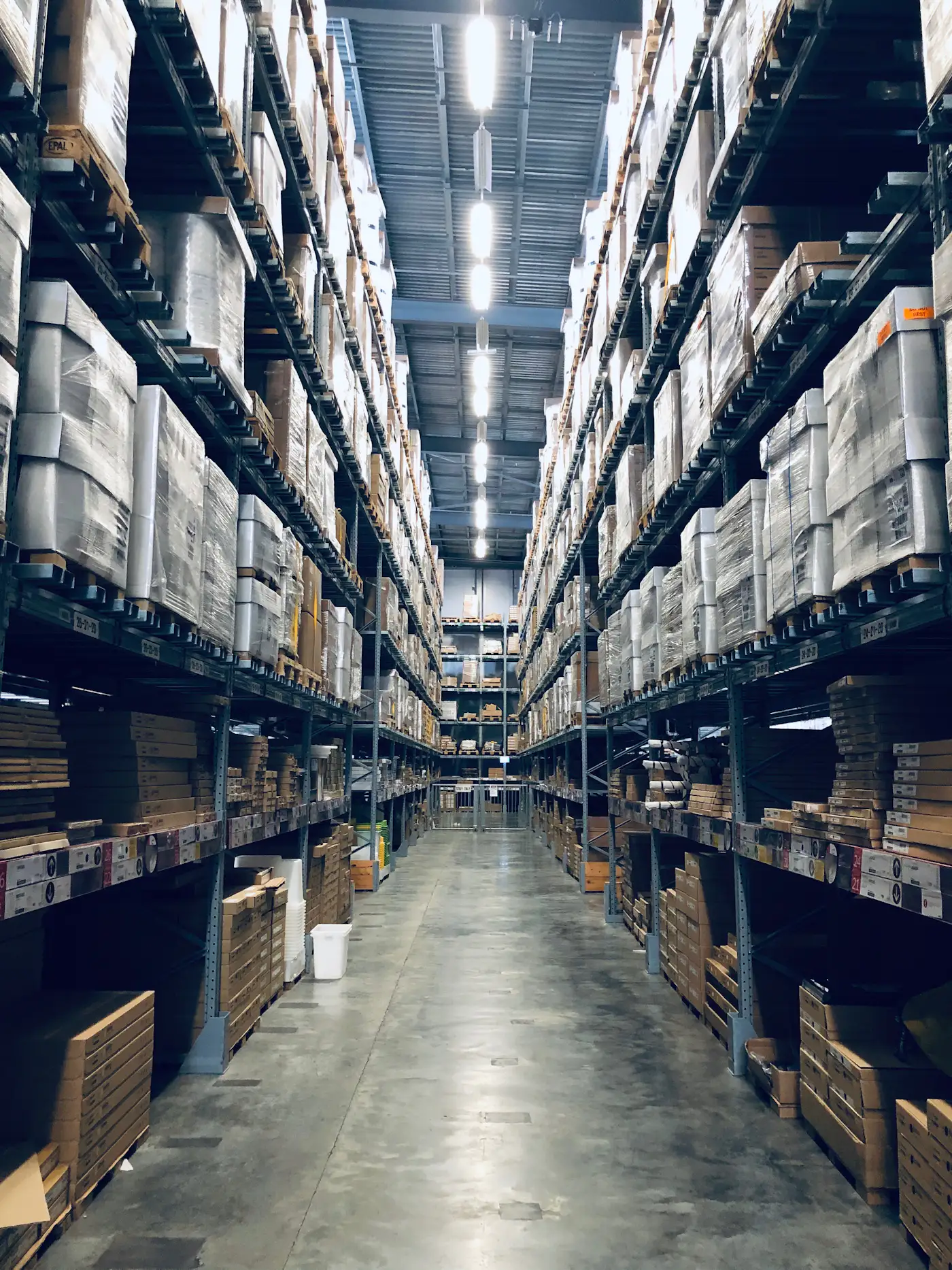
Industrial floors take punishment that no other commercial floor sees: steel and polyurethane forklift wheels, dragged pallets, chemical spills and constant dust. Papa Flooring provides warehouse floor coating in Vancouver, industrial epoxy flooring in Surrey and concrete polishing for warehouses across BC's Lower Mainland, planned around your operation so the building keeps shipping while the work is done.
Choosing a system for industrial floors
The right system depends on what happens on the floor. A distribution centre with forklift traffic has different priorities from a food processing room or a maintenance shop.
| Use | Recommended system | Why |
|---|---|---|
| Warehouse and distribution floors | Polished or densified concrete | Dust-proofs the slab, hard-wearing, no coating to wear through, low maintenance |
| Manufacturing, workshops and maintenance bays | Epoxy coating or broadcast epoxy | Chemical and oil resistance, bright cleanable finish, optional anti-slip texture |
| Food and beverage processing, wash-down areas | Urethane cement | Tolerates thermal shock, hot water wash-down and many food acids |
| Traffic lanes, pedestrian routes and bays | Line striping and safety markings | Separates forklifts from people and organizes storage |
Concrete polishing for warehouses
Polished concrete is often the most practical warehouse floor. Grinding removes surface laitance and old coatings, a densifier hardens the surface, and progressive polishing leaves a floor that stops dusting, is easy to sweep and has no topcoat to peel under forklift traffic. Higher gloss levels also help reflect light.
Epoxy and urethane cement
Where chemicals, oils or cleaning requirements matter, industrial epoxy and resin systems provide a sealed, cleanable surface. Broadcast aggregate adds slip resistance in wet zones. For food plants, breweries and other areas with hot wash-downs, urethane cement is typically the better choice because it handles temperature swings that can cause standard epoxy to crack or debond.
Joints, cracks and slab repair
In most warehouses, the joints fail before the floor does. Forklift wheels hammer unprotected joint edges until they spall, and the damage spreads. We repair spalled joints, fill them with a semi-rigid joint filler suited to forklift traffic, and where needed rebuild or armour joint edges. Cracks are routed and filled, and low spots can be corrected through our subfloor preparation work before any coating goes down.
Working around live operations
Shutting down a warehouse costs money every hour. We plan industrial work to minimize that.
- Phased work by aisle, bay or zone so the rest of the building keeps running
- Night and weekend shifts to fit around shipping schedules
- Dust-controlled grinding with vacuum extraction
- Fast-cure options where a quick return to service matters
- Clear handover with cure times and traffic guidance for each zone
Cure times vary by system and temperature. Polished concrete can typically take traffic straight away, while coatings need time before forklift loads. We set out these times in the proposal so you can plan racking moves and inventory.
Industrial projects across the Lower Mainland
We work in industrial areas across the region, from Campbell Heights and Newton in Surrey to logistics buildings near YVR in Richmond and business parks in Langley. Send us your floor plan and a description of how the space is used, or book a site assessment, and we will provide a line-item proposal with a phasing plan.
Frequently asked questions
What is the best warehouse floor coating?
For many warehouses, polished or densified concrete is the most durable option because there is no coating to wear off under forklifts. Epoxy suits areas with chemicals or oils, and urethane cement suits wash-down and food processing areas.
Can you work while our warehouse is operating?
Yes. We phase the work by zone and schedule around shipping, often on nights and weekends, so the rest of the building stays in use.
How soon can forklifts drive on a new floor?
It depends on the system and temperature. Polished concrete can typically take traffic right away, while epoxy and urethane cement need curing time first. We provide return-to-service times for each zone.
Do you repair damaged floor joints?
Yes. We repair spalled joints, install semi-rigid joint fillers for forklift traffic, and armour or rebuild joint edges where needed. Joint repair is often the first step before concrete polishing.
Do you install industrial epoxy flooring in Surrey?
Yes. We install industrial epoxy flooring in Surrey and across Greater Vancouver, including broadcast anti-slip systems and line striping.