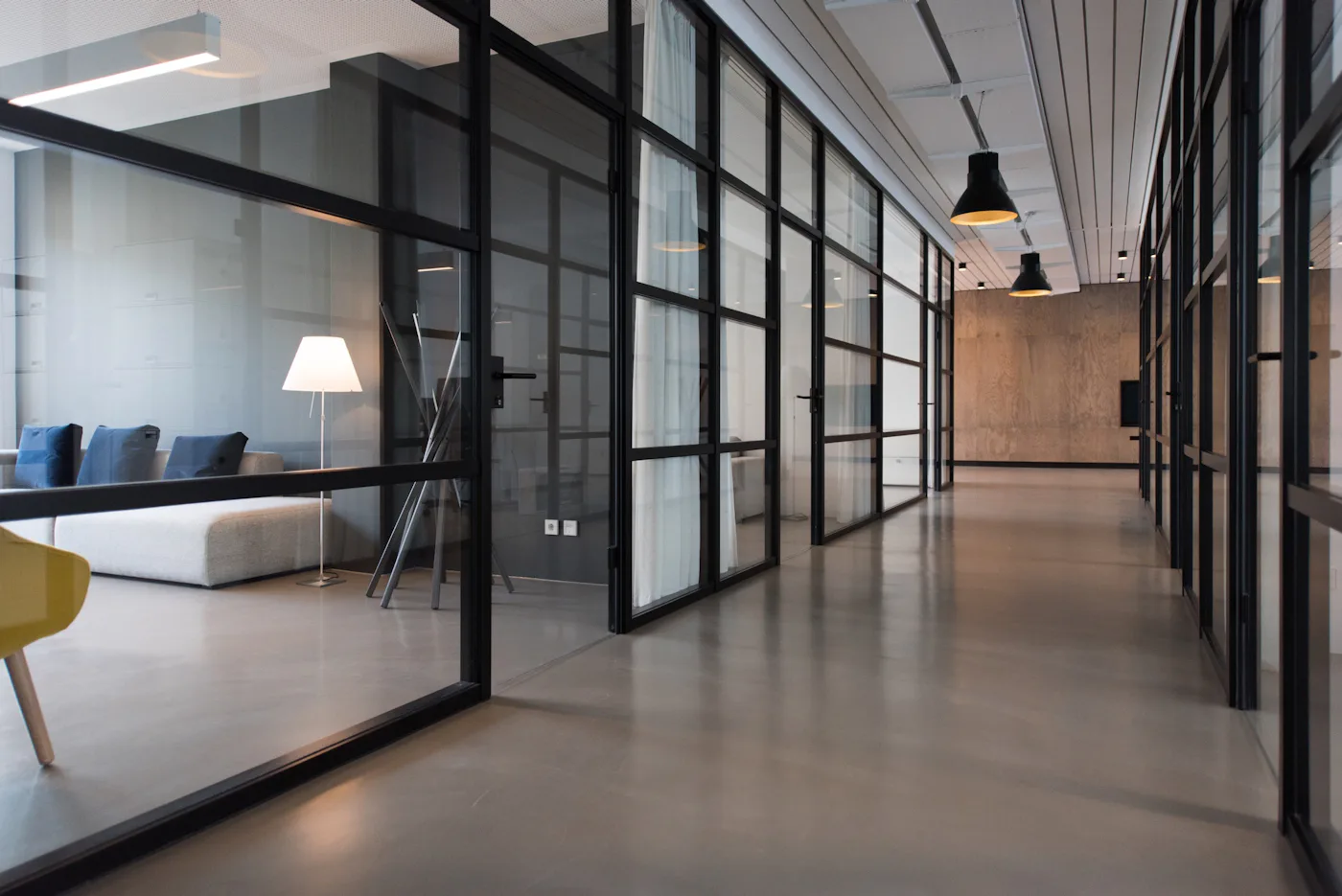
Office flooring installation in Vancouver rarely happens in an empty building. Property managers are working around tenants who still need to come in on Monday, tenant improvement contractors are working to a fixed turnover date, and office managers want the new floor down without losing a week of productivity. Papa Flooring plans around those realities with after-hours phasing and a single point of contact from site assessment to clean handover.
Choosing the right floor for each office zone
A commercial office renovation is not one floor. Each zone takes different traffic and cleaning, so the right system per zone avoids early wear where it matters most.
| Zone | Recommended system | Why |
|---|---|---|
| Open office and workstations | Carpet tile | Absorbs sound, rolls well under chairs, and damaged tiles can be swapped out individually |
| Kitchens and break rooms | Commercial LVT or sheet vinyl | Handles spills and daily mopping; sheet vinyl reduces seams near sinks |
| Washrooms | Sheet vinyl with coved edges, or LVT | Water-resistant, cleanable surface with fewer joints for moisture to reach |
| Lobbies and reception | Polished concrete or LVT, with entrance matting | Hard-wearing first impression; matting catches rain and grit at the door |
| Meeting and boardrooms | Carpet tile with a quality underlay or cushion back | Reduces echo and footfall noise for calls and presentations |
Office carpet tile in Vancouver workspaces
For most open-plan floors, commercial carpet tile remains the practical choice. It softens a busy room's acoustics, lets designers define circulation routes with pattern, and a stained tile can be replaced without disturbing the rest. Where a client wants a harder, cleaner look, commercial LVT pairs well with carpet tile through matching transition profiles.
Lobbies, kitchens and wet areas
Ground-floor lobbies take the brunt of the wet coast weather. Polished concrete is durable and needs no wax, and LVT gives designers more colour and pattern options. Either way, proper entrance matting keeps water off the main floor. In kitchens and washrooms, we favour resilient surfaces that tolerate daily wet cleaning.
Working around occupied floors and tenant deadlines
The hardest part of most office jobs is the schedule, so we plan the work to fit the building.
- After-hours and weekend installs so staff return to a working floor
- Phased work, one area at a time, with furniture moved and returned
- Furniture lifting for workstations where full removal is not practical
- Line-item proposals that map cleanly to landlord work letters
- Clean handover ready for move-in or turnover inspection
For tenant improvement GCs, we work to your schedule and drawings and coordinate with the other trades on site. For property managers handling turnovers, our proposals are broken down by area, which makes it easier to separate landlord and tenant costs under the work letter.
Subfloor condition and moisture
Many office failures trace back to what is under the finish. Older towers often have uneven slabs and old adhesive residue; newer concrete can hold moisture longer than expected. We carry out a site assessment and moisture testing before installation, and handle grinding, patching and self-levelling through our subfloor preparation work so the new floor goes down flat and the adhesive performs as intended.
Planning tip. Book the site assessment early in a tenant improvement. Moisture and floor prep findings can affect the schedule.
Office projects across Greater Vancouver
We work on office floors from downtown towers in Vancouver to business parks in Burnaby and the growing office market around City Centre in Surrey. If you have drawings, a finish schedule or just a floor that needs replacing, request a consultation or send us your drawings and we will come back with a clear, line-item proposal.
Frequently asked questions
Can you install office flooring without closing our office?
Yes. Most office flooring installation in Vancouver can be done after hours or over weekends and phased by area. We move or lift furniture, install a section, and return the space ready for use the next working day.
Is carpet tile or LVT better for an office?
It depends on the zone. Carpet tile is usually best for open office and meeting rooms because of its acoustic benefits, while LVT suits kitchens, break rooms and high-traffic corridors. Many commercial office renovation projects use both.
Do you work with tenant improvement contractors?
Yes. We work as the flooring trade for general contractors on tenant improvements, following the drawings and finish schedule and coordinating with other trades.
Do you lift workstations or do we need to empty the floor?
We can lift and reposition many workstation systems to install office carpet tile beneath them. Where furniture must come out, we build the move into the phasing.
Why does moisture testing matter on office floors?
Concrete that holds too much moisture can cause adhesive failure, lifting and odours under resilient flooring and carpet tile. Testing before installation, typically with in-situ RH testing to ASTM F2170, lets us choose the right adhesive or moisture mitigation before the floor goes down.