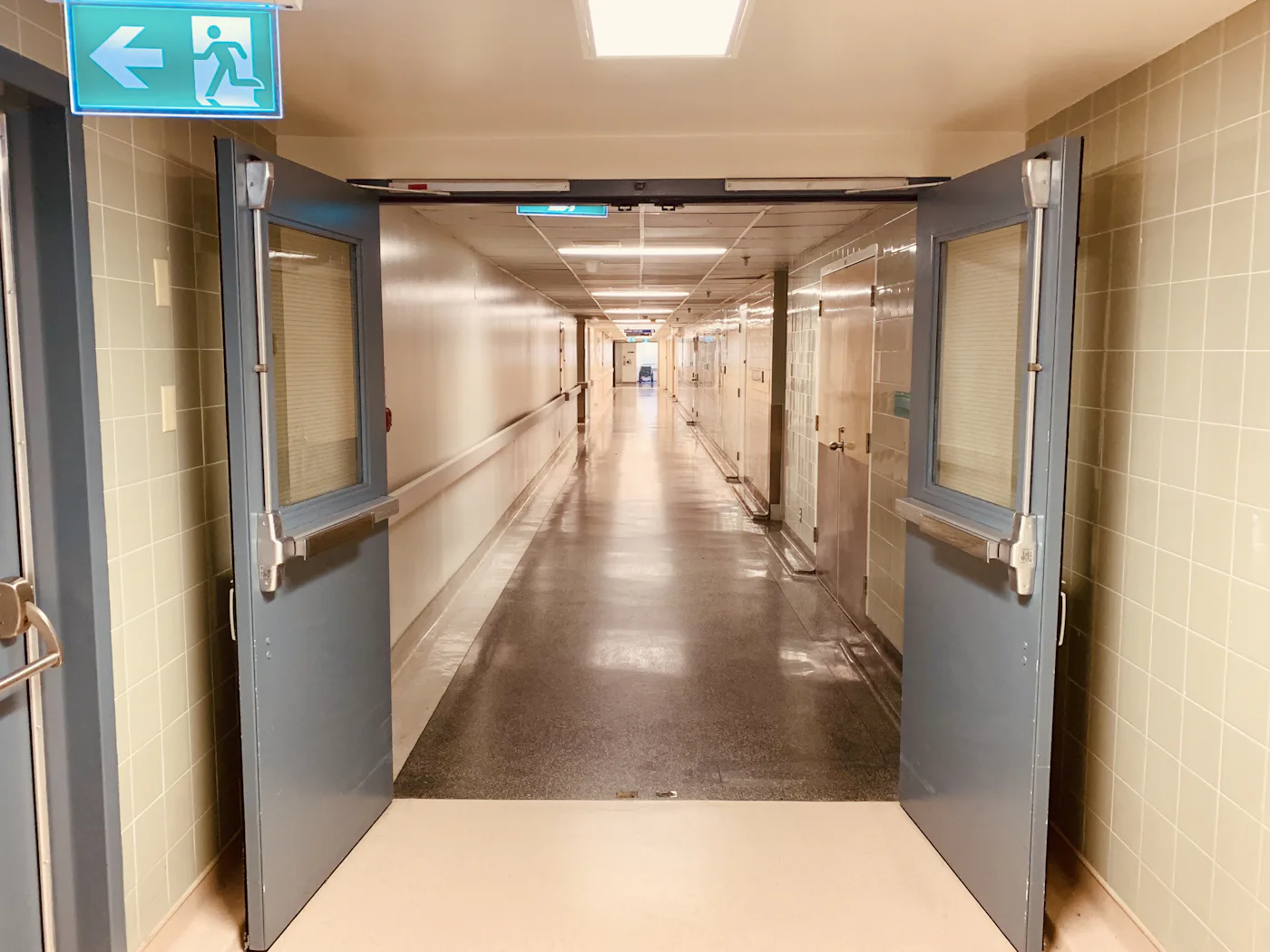
What is safety flooring?
Safety flooring is a broad term for floors designed to reduce slips and falls, support hygiene or absorb impact. Papa Flooring installs anti-slip flooring in Vancouver and across the Lower Mainland, including healthcare flooring for BC clinics, commercial kitchen safety flooring and rubber gym flooring. Each environment has different risks, so we start by looking at how the floor will be used, cleaned and exposed to water, grease and traffic.
Slips, trips and falls are among the most common causes of workplace injury, and WorkSafeBC guidance asks employers to identify and control these hazards. The floor surface, entrances, stairs and transitions are a big part of that. We do not certify floors or workplaces, but we can install systems chosen to reduce those risks.
Our safety flooring systems
Slip-resistant sheet vinyl
Safety sheet vinyl contains embedded particles, such as quartz or silicon carbide, through its wear layer to improve grip in wet conditions. It is common in washrooms, change rooms, kitchens, care homes and clinic wet areas, and it keeps its slip resistance as it wears.
Heat-welded seams and flash coving
For infection control, sheet vinyl seams are heat-welded with a matching rod so there are no gaps for moisture or bacteria. Flash coving, also called integral cove, turns the flooring up the wall in a smooth radius, removing the corner where dirt collects. Together, they create a continuous, easy-to-disinfect surface used in exam rooms, procedure rooms, labs and washrooms.
Rubber flooring for gyms and stairs
Rubber flooring absorbs impact, resists dropped weights and gives good traction. We install rubber rolls and tiles for gyms, fitness studios and weight areas, and rubber stair treads and risers that improve grip and reduce noise in stairwells.
Resin with aggregate for wet areas
In commercial kitchens, food processing and wash-down areas, a resin floor with broadcast aggregate gives a seamless, textured surface that handles water, grease and cleaning chemicals. Urethane cement systems also handle hot water and temperature swings. See our epoxy and resin flooring page for system details.
Stair nosings, ramps and transitions
Stairs and ramps are where many falls happen. We install slip-resistant stair nosings with contrasting colour strips so step edges are easy to see, textured treads on ramps and properly secured transitions where floor types meet, so there are no lifted edges or height changes to catch a foot.
Entrance matting
On the wet coast, water and grit tracked in from outside make entrances one of the most slippery spots in a building. A well-sized walk-off system, using recessed or surface-mounted matting, captures moisture before it spreads across hard floors.
How slip resistance is measured
Slip resistance is not just a feeling underfoot. It is measured with recognized test methods. The pendulum test measures how much friction a surface provides, wet or dry, by swinging a rubber slider across it. Dynamic coefficient of friction (DCOF) testing measures resistance while a sensor moves across the surface. Manufacturers publish ratings for their products, and specifiers use them to match a floor to its setting. We help you compare product data, but results depend on cleaning, contamination and wear, so maintenance matters as much as the product.
Choosing the right option
| Area | Common choice | Why |
|---|---|---|
| Clinic exam and procedure rooms | Sheet vinyl, welded seams, flash coving | Continuous, easy to disinfect |
| Washrooms and change rooms | Slip-resistant sheet vinyl or broadcast resin | Grip when wet, no open seams |
| Commercial kitchens | Urethane cement with aggregate | Handles heat, grease and wash-downs |
| Gyms and weight rooms | Rubber rolls or tiles | Impact absorption and traction |
| Stairs | Rubber treads or slip-resistant nosings | Visible edges and grip |
| Entrances | Walk-off matting | Traps water and grit |
Where it works best
- Healthcare clinics, dental offices and care facilities
- Restaurant and hospitality kitchens
- Gyms and fitness studios
- Stairwells, ramps and building entrances
We work across the region, including Broadway corridor medical offices in Vancouver, healthcare buildings in Surrey and clinics in North Vancouver.
Cleaning affects grip. The wrong cleaner or a build-up of residue can reduce slip resistance on any floor. Follow the manufacturer's maintenance guide and use the recommended products.
Planning your project
Safety flooring often goes into spaces that are operating, such as clinics, kitchens and gyms. We assess the floor, test slab moisture, prepare the subfloor and schedule work after hours, on weekends or in phases to limit disruption. If the slab needs levelling first, our subfloor prep team handles it. For clinics that also need standard resilient flooring in offices and corridors, see commercial LVT and sheet vinyl. You get a line-item proposal and a single point of contact. Request a Consultation to book a site assessment.
Frequently asked questions
What is the best anti-slip flooring for wet areas?
It depends on the space. Slip-resistant sheet vinyl suits washrooms and clinic wet areas, while resin with broadcast aggregate or urethane cement suits commercial kitchens and wash-down areas. We match the system to water, grease, cleaning and traffic.
Why does healthcare flooring in BC use welded seams and coving?
Heat-welded seams and flash coving create a continuous surface with no gaps or corners where moisture and bacteria can collect. That makes floors easier to clean and disinfect in exam rooms, procedure rooms and washrooms.
How is slip resistance measured?
Common methods include the pendulum test and dynamic coefficient of friction (DCOF) testing. Manufacturers publish ratings, which help compare products, though cleaning and contamination affect real-world grip.
Do you install rubber gym flooring in Vancouver?
Yes. We install rubber rolls and tiles for gyms, fitness studios and weight areas, plus rubber stair treads for stairwells.
Can safety flooring help with WorkSafeBC slip and trip requirements?
WorkSafeBC expects employers to control slip and trip hazards, and the right floor, matting and stair nosings are part of that. We install suitable systems, but we do not certify workplaces, so your safety program should cover inspections and maintenance.